The Outboard Expert: Emissions Rules Low-Down
EPA proposes adopting CARB emissions levels nationwide.
April 26, 2007

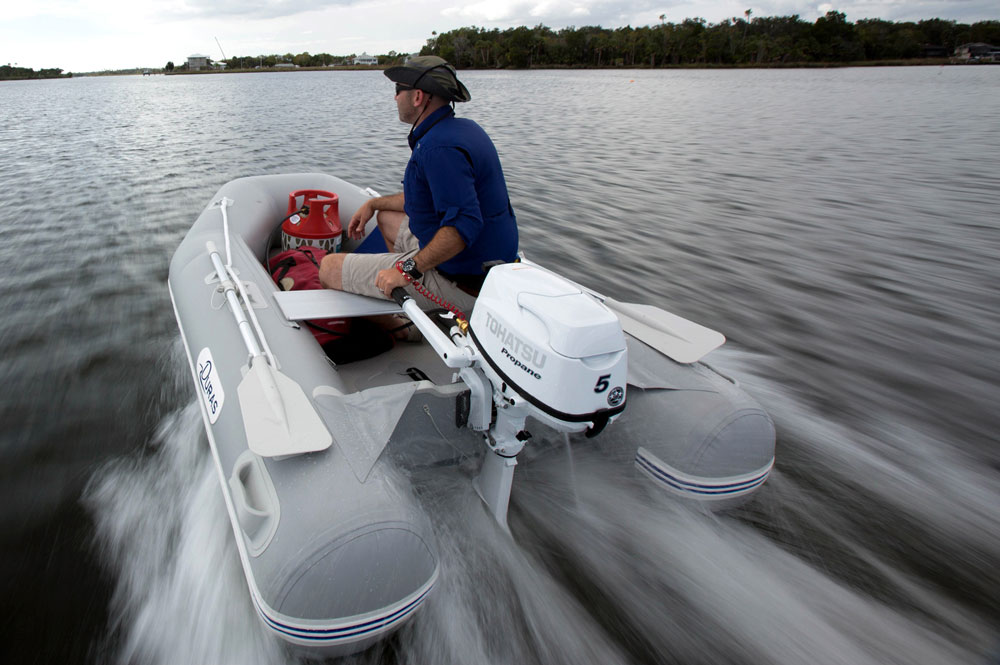
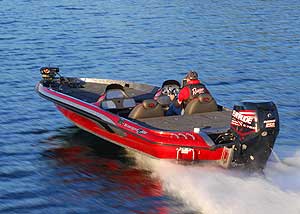
Outboard-powered boats like photographer Robert Brown's Power Cat could be affected around the country if CARB standards are adopted nationwide. (Photo courtesy Robert Brown, www.robertbrownphotography.com)
The federal EPA on April 17 proposed a new emissions standard that utilizes the emissions levels established by the California Air Resources Board (CARB) for its Three Star Ultra-Low category, beginning on January 1, 2009. The CARB Three Star level is about 45 percent lower than the current EPA emissions level for an engine over 40 kW (about 53 hp). The EPA proposal also calls for the first control of carbon monoxide (CO) in outboard exhaust emissions. The proposed emissions standard would also apply to personal watercraft.
Since many current outboards already meet the CARB Three Star standard, meeting the proposed lower EPA emission level should not present a significant challenge to outboard builders. In fact, not all outboards sold by each manufacturers have to pass the emissions threshold. Rather, the average emissions output of the entire product line has to be below the mandated emissions level, so some motors in the line may exceed the emissions target if other motors are below that target.
"With the tighter emissions levels, all manufacturers are going to have to manage their product mix more carefully to make sure they keep their average below the limit," said Mark Reichers of Mercury Marine. "However, there is also a cap on maximum allowable emissions built into the EPA proposal that will eliminate all carbureted and EFI two-stroke outboards in 2009." Today, Mercury Marine and Yamaha are able to use credits earned by exceeding the emissions average to keep a few of those high-emissions motors, which are popular power for "price point" fishing boats, on the market. So if you'd like to own one more old-school two-stroke kicker, better buy it soon.
Hoses, Tanks and Vents, Too
The bigger concern for outboard and boat builders is a second component of the EPA proposal, which for the first time aims to control evaporative emissions, which include requirements to control fuel tank permeation, fuel line permeation, and diurnal emissions.
The present materials used for plastic fuel tanks and for fuel lines allow a small amount of hydrocarbons to permeate through that material when it is in contact with liquid gasoline. Obviously, this level of hydrocarbon is very small or it would be a constant fire hazard in the bilge. But the EPA feels it's significant enough to regulate. Low-permeation fuel line is already on the market, and according to Dan Ostrosky, the Yamaha manager of government relations who sits an industry committee that works with the EPA, converting the fuel lines from the boat tank to the engine will not be a problem.
"The EPA wants all the fuel lines under the outboard cowling to be low-permeation also," said Ostrosky. "and while the main line from the tank comes in several standard sizes, each manufacturer uses a number of different size and shaped lines on the powerhead, and low-permeation replacements are not available at this time."
The proposed fuel line regulation would take effect in 2009, so the outboard manufacturers would have about a year to convert all of the lines on the powerhead. The industry is likely to argue for more time to make that conversion, or to be allowed to phase it on over several years. Ostrosky said that the low-permeation material that will have to be used for primer bulbs may be stiff and hard to use in cold weather.
Plastic fuel tanks manufactured with a blow-molded process can be made low-permeation, but they will become more expensive, said Ostrosky, and some boat builders may elect to convert to aluminum tanks, when that proposed rule takes effect in 2012.
Diurnal emissions occur when a fluctuation in temperature, which commonly occurs overnight, causes the air and fuel in the tank to expand and contract as it warms and cools. This cycle causes the tank to "breath" as air flows in and out of the fuel tank vent, carrying hydrocarbon emissions with it. The proposed solution will be the installation of a charcoal canister filter on the vent line that will capture the HC emissions, beginning in 2010. Beginning in 2011, portable fuel tanks used for small outboards will also have to be low-permeation, and will have a new type of automatic vent.
It's important to note that these are proposed regulations and are subject to change before they become law. The public can comment until August 3, 2007, and a hearing on the proposal is scheduled for June 5 in Reston, Va. In the mean time, the marine industry is likely to argue for more time to implement some of the proposals, and environmental groups may argue that the new emissions levels are not stringent enough.
To see a copy of the proposed EPA rule and related information, and to find out how to comment to the EPA, visit www.epa.gov/otaq/marinesi.htm.
Mercury Marine Engineering Chief Resigns

Vice President of Research and Development Claus Bruestle, who led development of the Verado outboard line, is leaving Mercury Marine.
Mercury Marine Vice President of Research and Development Claus Bruestle, who led the development of the supercharged Mercury Verado outboards, has announced he will leave Mercury in May. Bruestle, who came to Mercury five years ago after leading high-performance engine development for Porsche, will return to his homeland of Germany and become head of engineering for a major automotive engine supplier. Bruestle cited family circumstances as his reason for leaving Mercury.
"Within five years, Claus has established Mercury R&D as a competitive advantage, and left a strong platform for future growth," said Patrick C. Mackey, president of Mercury Marine. "Under his leadership, Mercury's research and development department was reorganized, while the company completed the most important overhaul of Mercury's outboard product lineup in the company's history."
Mercury's Verado outboard engine line was introduced in 2004 and expanded in 2005 and 2007. It remains the only supercharged production model outboard engine.
New Wrangler Fishing Pants and Shorts
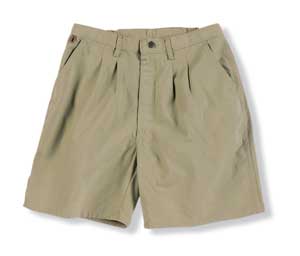
Wrangler Rugged Wear Angler Shorts feature a loop that can be used to fasten the kill switch lanyard clip.
New Wrangler Rugged Wear Angler Pants and Angler Shorts feature a sewn-in "kill switch loop" just below the belt for the clip on the emergency engine shut-off lanyard. Both also have a double-pleated front, side elastic waist for comfort, roomy side tool pockets, secure closures on back pockets, and a solid-brass YKK zipper. In khaki or indigo denim, waist sizes 30 to 52. Price for the pants or shorts is about $32. www.wrangler.com
Mercury Spring Promotion Adds Warranty Coverage
During the Mercury Get the Best Spring Sales Event, Mercury 40 hp FourStroke BigFoot and all 50 and 60 hp FourStroke models will receive an additional three years of factory-backed non-declining limited warranty coverage - a $640 value - in addition to the standard three-year factory warranty, giving these outboards a total of six years of factory-backed limited warranty. The program applies to new engines sold in the United States between April 1, 2007, and June 30, 2007. www.mercurymarine.com
Editor's Note: Charles Plueddeman is the editor at large for Boating, the nation's largest boating magazine.